
Corporate Event Logistics: A Practical Guide to Seamless Business Events
What if the smoothest corporate retreat is the one where nobody notices the logistics? Behind a calm arrival and a well-paced programme, corporate event logistics bring together transfers, accommodation, suppliers, timings and attendee needs. Each hand-off affects what happens next.
Coordinating these moving parts can feel demanding. Even a polished event can lose impact if the experience doesn’t support a clear business purpose, while destination travel adds more details to align. This guide covers the main workstreams, how they depend on one another and how to shape a coherent experience from arrival through to departure.
We’ll look at the practical sequence behind a well-managed event, from itinerary design and transport to activities, catering and local arrangements. For leadership retreats and incentive travel in Ibiza or Chamonix, local support can connect the details to the destination. The aim is for logistics to serve the gathering, rather than distract from it.
Table of Contents
What corporate event logistics really involve, and why they shape the experience
Corporate event logistics turn an event brief into a dependable attendee experience, from arrival to departure. They connect practical decisions to the gathering’s purpose: a room arranged for discussion, a transfer that leaves time to settle, food served without interrupting a session and a schedule with space to take part.
These details are more than operational. A crowded room can make discussion harder; poorly timed transport can leave guests preoccupied, while an unhurried meal can make room for informal conversation. The wider Event management principles encompass planning and coordination. A useful test is whether each choice works for the people attending. Event strategy sets the purpose; creative programming shapes what happens; logistics makes the experience work in practice.
Which corporate events rely on joined-up logistics?
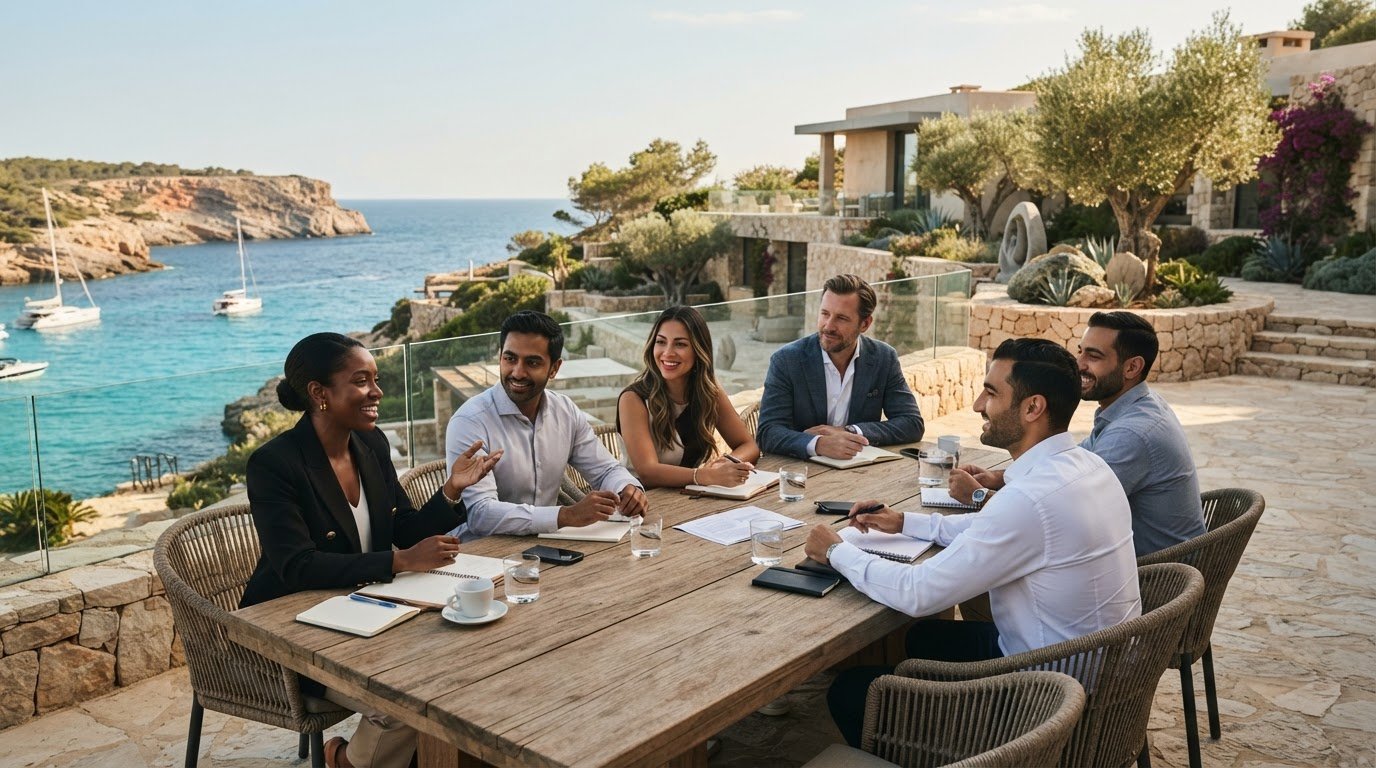
A single-day meeting may centre on a venue, room layout, refreshments and a reliable running order. A multi-day retreat adds accommodation, meals, transfers between locations and activities that need to fit around working sessions. Incentive travel can bring together a broader itinerary. An Ibiza retreat and a Chamonix leadership offsite are different destination examples, not templates: guest numbers, duration and programme all affect the coordination required.
How logistics support the event's business purpose
Begin with the intended purpose, whether that’s alignment, recognition or stronger team connection. Then consider how each operational choice supports it. A layout designed for discussion may suit alignment better than rows of chairs; shared dining or a guided activity can create a different setting for connection. When timings, transitions and practical arrangements are considered, participants can give more attention to the people and ideas in front of them. This creates the conditions for a meaningful experience without promising a particular business result.
The corporate event logistics workstreams that must fit together
Map the attendee journey from arrival through sessions, meals, activities and departure. This shows where one decision affects another: venue capacity shapes room layouts, catering numbers, transfer timings and the programme. Treat the main workstreams, including venue, travel, accommodation, suppliers, schedule and communications, as connected parts of one plan. Include accessibility needs, dietary requirements and clear participant information as you develop the brief.
Travel, accommodation and venue coordination
Use a shared schedule for arrival windows, transfers, check-in and venue access. Allow time for each hand-off and name the person responsible for it. For teams travelling from the UK, different departure points and arrival patterns can affect transfer arrangements. Ibiza villas and Chamonix chalets offer destination-led accommodation options, but each setting has its own distances and access considerations. Align the accommodation plan with the session locations and how guests will move between them.
Suppliers, catering and programme hand-offs
For every supplier hand-off, set an owner, agreed timing and the information needed to deliver the next step. Catering should follow the agenda, not compete with it: plan meal service, dietary details and refreshments around sessions and activities. The same applies to private transport, guided mountain activities, yacht charters and wellness sessions. Build each into the programme with realistic transition time, rather than squeezing it into a gap that leaves guests rushed.
For a destination retreat, local knowledge helps connect the itinerary with practical arrangements on the ground. Destination retreat planning can bring accommodation, transport, suppliers and activities into a considered whole.
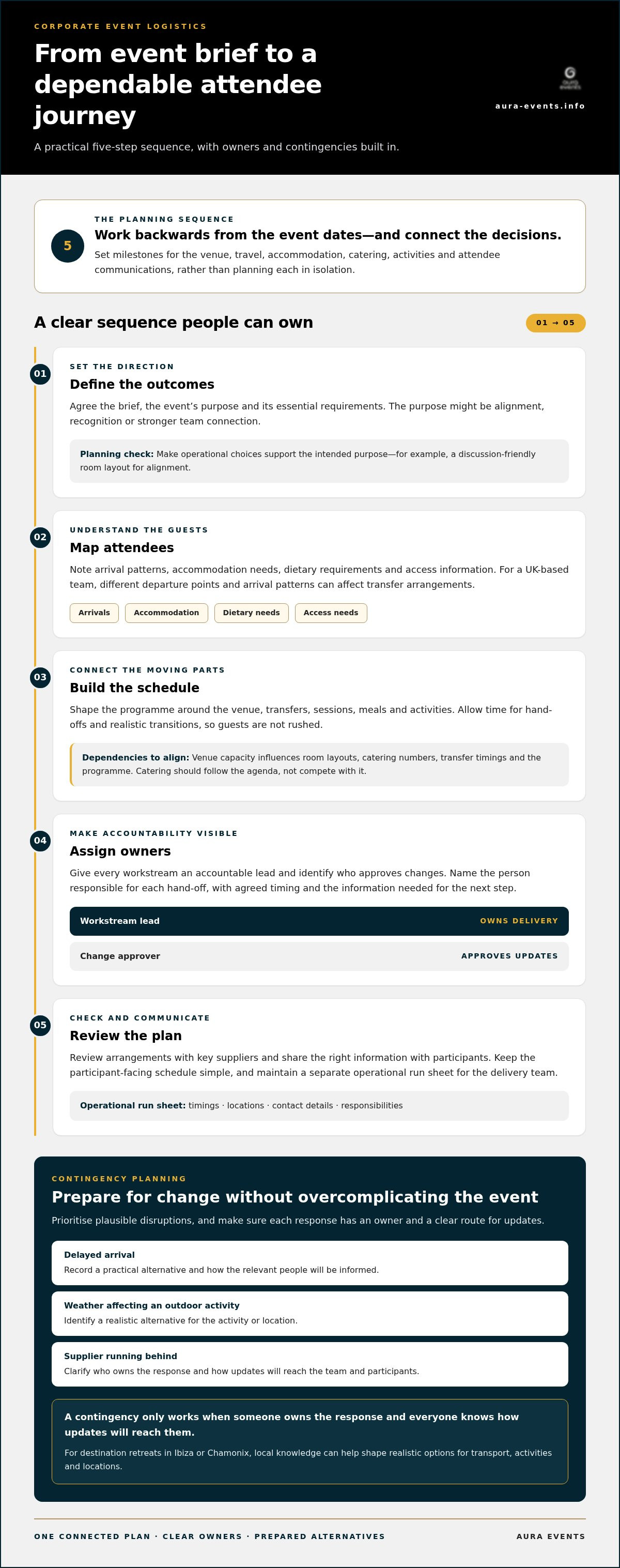
How to plan corporate event logistics: a practical sequence and contingency plan
A clear sequence turns a complex brief into decisions people can own. Work backwards from the event dates, setting milestones for the venue, travel, accommodation, catering, activities and attendee communications. The plan should connect these choices, rather than letting each develop in isolation.
Define the outcomes and agree the brief, including the event’s purpose and essential requirements.
Map attendees, noting arrival patterns, accommodation needs and relevant dietary or access information.
Build the schedule around the venue, transfers, sessions, meals and activities.
Assign owners for every workstream and identify who approves changes.
Review the plan with key suppliers and share the right information with participants.
Build a timeline with accountable owners
Give each decision a milestone and each workstream an accountable lead. Agree how changes are approved, so a revised transfer time or activity doesn’t create conflicting instructions. Keep the participant-facing schedule simple, and maintain a separate operational run sheet with timings, locations, contact details and responsibilities. A single current version gives the team a shared reference point.
Prepare for change without overcomplicating the event
Prioritise plausible disruptions, such as a delayed arrival, weather affecting an outdoor activity or a supplier running behind. A contingency only works when someone owns the response and everyone knows how updates will reach them. Record a practical alternative and a communication route for each priority risk. In Ibiza or Chamonix, local knowledge can help shape realistic options for transport, activities and locations.
Make planning manageable for a UK-based team
Agree which decisions sit with the organisation and who coordinates local delivery. For colleagues travelling from London, Manchester, Bristol or elsewhere, map arrival patterns and time away before confirming the programme. Teams travelling from Amsterdam, Boston, New York, Washington or Miami also need their arrival plans reflected in the schedule. For destination-specific considerations, explore this guide to luxury corporate retreats in Ibiza. Aura Events plans corporate retreats in Ibiza and Chamonix, coordinating itineraries, suppliers and on-site management.
When specialist corporate event logistics make a destination retreat work
Internal coordination may be enough for a straightforward event with one venue, a compact schedule and familiar suppliers. Complexity grows when a retreat spans several locations, brings together multiple suppliers or includes activities shaped by local conditions. In those cases, the itinerary, supplier coordination and delivery on the ground need to work as one.
What a specialist partner contributes
Aura Events brings over twenty years of local expertise in Ibiza and Chamonix to leadership retreats and incentive travel. The agency coordinates itinerary design, local suppliers and on-site management, connecting villa stays, private yacht charters, guided mountain activities and ground transport within the wider programme. A coordinated point of contact across these moving parts means the internal organising team has fewer separate hand-offs to manage. Luxury can set the scene, but the experience still needs to serve the retreat’s purpose.
Match the destination and format to the retreat's purpose
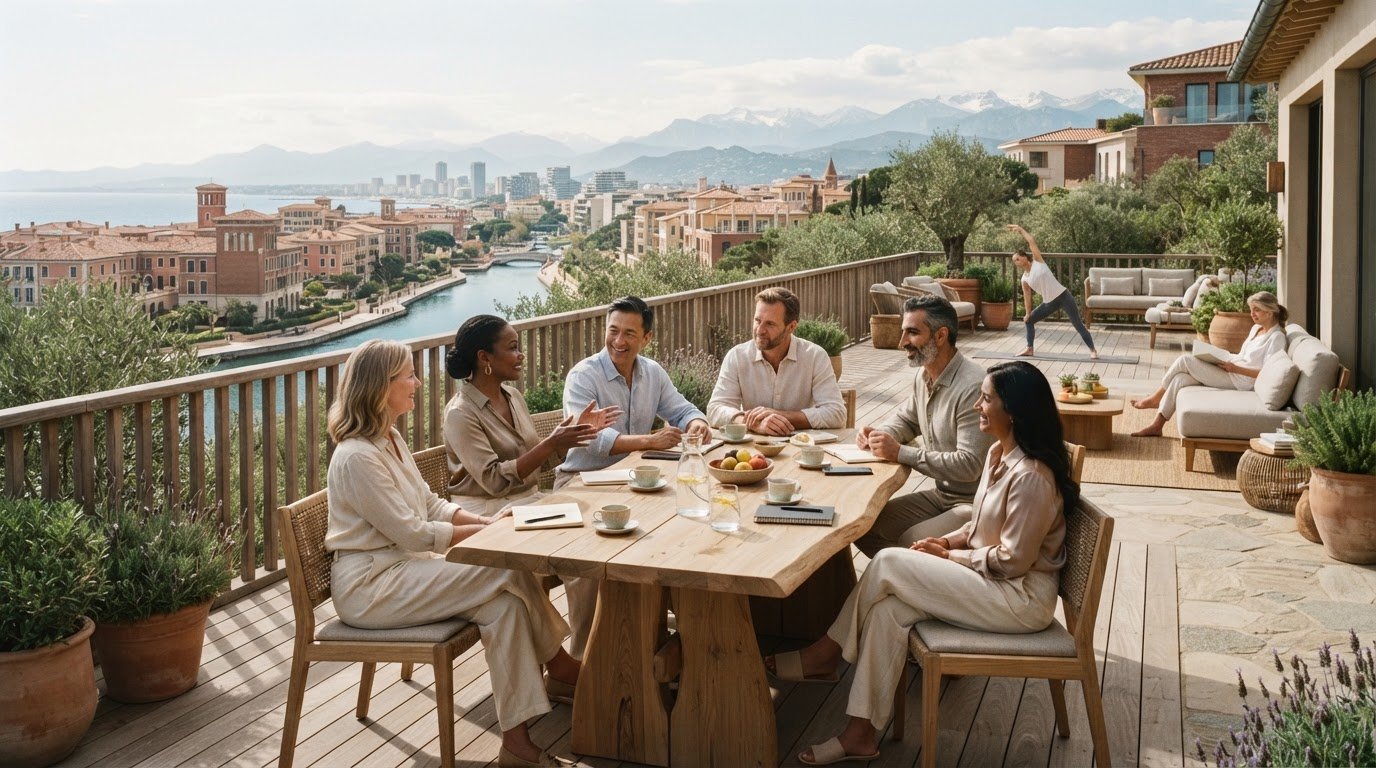
Ibiza’s coastal setting may suit a programme shaped around time together by the sea, while Chamonix’s alpine environment offers a different backdrop for a leadership offsite. Neither is universally better. Consider the objective, the people attending and the conversations or shared experiences the retreat should make room for. If you’re considering a mountain-based programme, this Chamonix leadership offsite guide offers destination-specific context.
Start by clarifying the objective, likely attendees and experience you want to create. Aura Events can coordinate a tailored corporate retreat, bringing those priorities into the planning process.
Give your next gathering a clear direction
The most useful next step isn’t to add more to the programme. Decide what deserves participants’ attention, then shape the experience around it. Let that priority guide the pace, setting and opportunities to connect. A retreat feels coherent when every element has a reason to be there, rather than simply filling the schedule.
Use that intention as the starting point for your next brief. Consider what you want colleagues to think, discuss or carry back into work, then plan the logistics to make space for it. For a destination gathering, an experienced local team can bring the ambition together with the practical details of delivery.
Plan your corporate retreat with Aura Events and start shaping an experience around the purpose behind bringing your team together.
Frequently Asked Questions
How far in advance should you plan corporate event logistics?
There’s no universal lead time: planning depends on the event’s scale, destination, guest numbers and supplier complexity. Set the objective and date early, then work backwards, allowing venue, travel, accommodation and programme decisions to inform one another. Put milestones in a shared calendar, name an owner for each and review dependencies regularly. This makes late decisions visible before they affect the attendee experience.
Who is responsible for corporate event logistics?
Responsibility may sit with an internal organiser, an event lead or a specialist agency, depending on the event’s scope. The job title matters less than clear authority: name a decision-maker for each workstream and agree who can approve changes. One person or team should maintain the joined-up schedule and keep stakeholders informed, so suppliers and colleagues aren’t acting on conflicting versions.
How do you manage dietary requirements and accessibility at a corporate event?
Collect dietary and access needs through a clear, considerate process, explaining why the information is needed and who will use it. Share relevant details with the venue and suppliers responsible for delivery. Dietary requirements may affect menu planning, while mobility needs could inform room layout, transfers or activity choices. Build these considerations in early and handle personal information discreetly.
What should an event-day logistics run sheet include?
A useful run sheet gives the delivery team one operational reference, with timings, locations, session transitions, supplier contacts, named owners and communication arrangements. Include arrival and departure movements, catering transitions and activity handovers, alongside a clear version date or update method. Keep attendee instructions separate if they need a simpler view, and make sure the people responsible on the day can access the current copy.
How can you keep a corporate retreat personal rather than over-scheduled?
Keep the agenda purposeful, not packed. Protect unstructured intervals for conversation, allow time to move between spaces and avoid stacking activities immediately after intensive sessions. Choose experiences that suit the group and the retreat’s aim, rather than adding them for novelty. For attendees travelling from London, Manchester, Bristol, Amsterdam, Boston, New York, Washington or Miami, leave breathing room around arrival and departure too.

Comments