
Executive Wellness Off-site: Strategic Buying Guide 2026
What if the most valuable part of a leadership retreat were not another presentation, but the space to think clearly together? An executive wellness offsite can sound indulgent when wellbeing is treated as an activity bolted onto the agenda. Leaders shouldn’t have to choose between restoration and useful work. A well-planned retreat makes room for both, with rest and connection built around the decisions and relationships the team needs to strengthen.
This guide will help you compare retreat formats and choose one suited to your objectives, leadership culture and participants’ needs. Whether your team is based in London, Manchester, Bristol, Amsterdam, Boston, New York, Washington or Miami, consider how to balance focused sessions with unstructured time, choose a setting that supports your aims, and coordinate accommodation, wellbeing, activities, catering and transport. Ibiza and Chamonix offer contrasting experiences, but the right choice is more than a beautiful backdrop. It depends on thoughtful design, clear logistics and a practical plan for carrying intentions back into work. Aura Events brings over twenty years of local expertise to bespoke retreats in both destinations.
Table of Contents
What Should an Executive Wellness Offsite Actually Achieve?
An executive wellness offsite combines intentional wellbeing with the real work of an executive team. Its purpose isn’t to reward leaders with a spa break or squeeze a few activities around a conventional strategy meeting. It creates the conditions for leaders to pause, reflect and engage with team priorities, with the pace and experiences shaped around what participants need.
“A well-designed executive retreat plans restoration around leadership reflection, so the team can return to its priorities with greater clarity and stronger connection.” The distinction matters: wellbeing belongs in the design, not as decoration or a promise to resolve every source of pressure.
When does a manager burn-out retreat make sense?
Sustained pressure, frayed communication and little space for considered reflection can signal that a leadership team needs room to step back. Isolation can also be part of the experience of senior roles; Executive Loneliness on Wikipedia explores this less visible challenge. A retreat may offer a supportive pause, but it isn’t clinical care and can’t substitute for changes to workloads, decision-making or workplace culture.
Before planning the programme, identify the business question the team needs to address, the pressures participants face, their different needs and any practical constraints. This makes it easier to select sessions and restorative experiences that feel relevant rather than imposed.
What does success look like beyond a change of scenery?
Set outcomes a retreat can reasonably support, such as honest shared reflection, renewed connection or agreed intentions for how the team will work together. For example, leaders might leave with a clearer understanding of where communication is strained and a commitment to make space for regular discussion. These are useful beginnings, not evidence that deeper organisational challenges have disappeared.
Distinguish the immediate experience from longer-term measures. Participants may report feeling more connected or focused at the close. Later, the organisation can review whether agreed actions were followed through and relevant team practices changed. A thoughtful offsite creates a starting point; follow-through gives it meaning.
Which Executive Wellness Offsite Format Fits Your Team?
The right format depends on the team’s current needs, the pace leaders can sustain and what they need to accomplish together. The best retreat format is the one that matches the team’s context and intended outcomes, not the one with the longest list of activities. Each element should have a clear purpose, whether it is easing the pace, encouraging conversation or creating room to think.
Spa-led: Suits teams seeking a gentler pace and restorative experiences. It can offer privacy and downtime, but strategic discussion needs deliberately protected space rather than being left to chance.
Nature-based: Works well for leaders who value movement and a change of environment. Guided mountain activities in Chamonix can create a shared experience, while quieter periods make room for reflection. Consider accessibility and whether the group prefers an active or more contemplative rhythm.
Integrated wellness and leadership: Combines tailored wellbeing experiences with leadership work and reflection. This format connects restoration with team priorities, provided the itinerary allows genuine breathing room.
How should you balance wellness and strategy?
Build a deliberate rhythm of focused working sessions, meaningful breaks and protected downtime. Filling every hour with meetings or activities can leave little room for informal conversation or reflection. For destination-led planning, the Ibiza corporate retreat guide explores how setting and programme can work together. Aura Events shapes bespoke corporate retreats around leadership objectives and participant needs.
Which setting suits the experience you want to create?
Ibiza’s Mediterranean atmosphere can suit a slower, restorative pace, with wellness, private villa accommodation and time together shaping the experience. Chamonix offers an alpine backdrop and guided mountain activities for teams drawn to movement and the outdoors. Neither setting is inherently better. Match the destination and activity style to the group’s preferences, privacy needs and purpose for meeting.
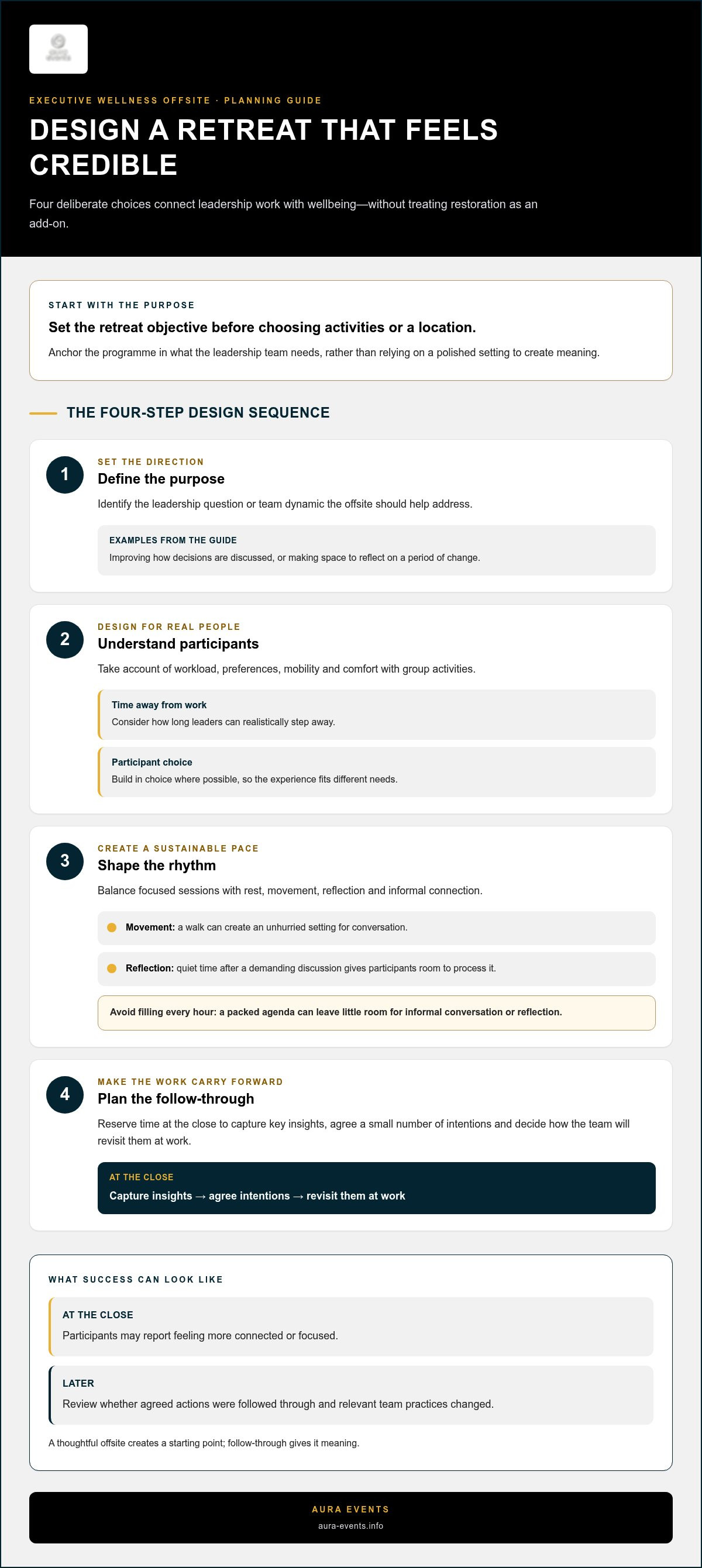
How Do You Design an Executive Wellness Offsite That Feels Credible?
Start with the purpose, not the venue or activity. Set the retreat objective before selecting activities or locations. This keeps the programme grounded in what the leadership team needs, rather than relying on a polished setting to create meaning.
Define the purpose. Identify the leadership question or team dynamic the offsite should help address, such as improving how decisions are discussed or making space to reflect on a period of change.
Understand participants. Consider workload, preferences, mobility, comfort with group activities and how long leaders can realistically step away from work. Build in choice where possible.
Shape the rhythm. Balance focused sessions with rest, movement, reflection and informal connection. A walk can create an unhurried setting for conversation, while quiet time after a demanding discussion gives participants room to process it.
Plan the follow-through. Reserve time at the close to capture key insights, agree a small number of intentions and decide how the team will revisit them at work.
How can organisers make wellbeing feel relevant, not performative?
Give each experience a reason to be there. If the aim is to reconnect the team, a shared meal or optional group activity may support conversation. If leaders need quiet reflection, protect unstructured time instead. Avoid schedules that feel compulsory and broad promises of transformation or guaranteed performance gains. A credible executive wellness offsite respects different preferences while keeping the programme connected to its purpose.
What should the team take back to work?
Close with a reflection on what stood out, what the team wants to do differently and who will help keep that intention in view. Keep commitments small enough to act on. A follow-up conversation or check-in can bring them back into focus and show whether they remain useful, without treating the retreat itself as a cure for wider pressures.
Aura Events tailors retreat planning and coordination to leadership objectives and participant needs. Explore bespoke corporate retreat planning for a programme shaped around your team.
What Should You Look for in an Executive Wellness Offsite Partner?
A strong partner starts by understanding the brief, not presenting a ready-made itinerary. They should get to grips with the leadership objectives, participant needs, preferred pace and practical requirements before shaping the programme. Look for bespoke design, destination knowledge and considered coordination on the ground. These elements help make the retreat feel coherent rather than like separate bookings gathered under one schedule.
For an executive wellness offsite, accommodation, wellbeing, food, transport and activities should support the same intention. A villa or chalet can provide a private base; a wellness experience can create space to pause; catering and transport can help the day flow; and an activity can bring people together. Aura Events brings over twenty years of local expertise to bespoke retreats in Ibiza and Chamonix, coordinating these details around leadership objectives.
Why does end-to-end coordination matter?
Joined-up planning can reduce avoidable friction between where leaders stay, how they travel between experiences and when the programme allows time to reset. This is especially useful when the itinerary includes both focused work and activities away from the accommodation. For an alpine example, the leadership offsite guide to Chamonix explores how destination and leadership programme can be considered together.
Discovery: Clarify the team’s purpose, preferences and practical needs.
Programme design: Tailor sessions, wellbeing and activities to the group.
Destination knowledge: Match the setting and experience style to the brief.
Coordination: Bring accommodation, catering, transport and timings into one itinerary.
How can you make the next step straightforward?
Start with a concise brief covering your team’s needs, retreat objectives, preferred timing and destination priorities. These details give the planning conversation a useful foundation. From there, the itinerary can take shape around the people attending, with the setting and experiences refined to suit the group. Share your retreat objectives with Aura Events to begin shaping the brief.
Give your leadership team room to move forward
The most useful retreat doesn’t end when everyone leaves the venue. Its value lies in what leaders carry into the decisions, conversations and working relationships that follow. Before planning, consider what would make the next chapter feel different for your team. A clearer shared direction? More deliberate space to reflect? A stronger habit of listening to one another?
Let that intention guide the brief. An executive wellness offsite can create a meaningful pause, but its lasting significance comes from how the team uses that space and what it commits to afterwards. The right setting and programme should feel considered, personal and connected to the work ahead.
Aura Events brings over twenty years of local expertise to bespoke corporate retreats in Ibiza and Chamonix, with end-to-end planning, coordination and on-site event management. Discuss a bespoke executive retreat with Aura Events, and begin shaping an experience around your leaders and the future you’re building together.
Frequently Asked Questions
Is an executive wellness offsite suitable for managers experiencing burn-out?
It can give managers space to step back, but an executive wellness offsite isn’t treatment for burnout or a substitute for addressing harmful working conditions. For example, if pressure is showing up as tense handovers or constant reprioritisation, leaders could use time together to examine how work is organised and what support is needed. Anyone needing clinical or occupational health support should access appropriate professional care.
Can an executive wellness offsite include serious strategy work?
Yes. Give the strategy work a defined purpose, such as resolving a decision that requires the whole leadership team, and circulate essential background material beforehand. This helps keep the retreat from becoming a series of status updates. Follow a focused working block with a change of pace, and assign someone to record decisions, owners and outstanding questions for the team’s return.
How do you protect privacy during an executive wellness offsite?
Agree expectations before the retreat, especially if discussions may involve sensitive team or organisational matters. Set out what stays within the group, whether notes will be taken and how they’ll be shared. Clarify expectations around photographs and social media, too. Private accommodation can support a more contained setting, while a well-considered meeting space helps the group speak without an audience beyond those invited.
What should happen after an executive wellness offsite?
Turn the retreat’s discussions into a short record of decisions, named owners and next steps, then circulate it while the details are fresh. Schedule a check-in within the team’s usual meeting rhythm to revisit progress and adjust commitments if priorities have shifted. Keep feedback about the retreat separate from longer-term changes in working practices, so leaders can assess both the experience and what followed.

Comments