
Stress-Free Corporate Event Planning: A 2026 Guide
What if the most memorable corporate event began with fewer decisions, not more? If you’re weighing up venues, suppliers, travel and timings, it’s easy for the details to take over. Stress-free corporate event planning starts by bringing those decisions back to one clear purpose.
You’re right to want more than an impressive setting. Without a defined objective, it’s hard to choose the right format. Without joined-up coordination, even a thoughtful programme can feel complicated for organisers and guests. A calm event needs a clear brief, shared responsibilities and one plan connecting each detail.
This guide shows you how to shape an event around your business and people objectives, create a manageable planning process, and anticipate practical needs that can affect the experience. From choosing a fitting format and setting a considered schedule to coordinating travel, activities and catering, you’ll find a clear route from first decisions to an event that feels effortless on the day.
Table of Contents
Why stress-free corporate event planning starts with a clear purpose
You’re balancing an event with the rest of your role, while decisions about guests, venues, travel and suppliers arrive from different directions. Stress-free corporate event planning brings those moving parts into order: clarify the purpose, agree ownership, sequence decisions and keep communication clear. Event management spans more than booking a space, as the Event Management Overview outlines.
A purposeful event earns its place in the calendar; a gathering simply fills a date. That distinction helps you make choices with confidence and gives the programme a coherent thread.
What should a corporate event achieve?
Choose one primary outcome, such as aligning leaders around a shared direction, recognising a team’s contribution or giving colleagues time to build stronger connections. Then make it observable. For example: “By the end of the offsite, the leadership team will agree three priorities for the next planning period.”
Let that objective guide the guest list, location, format and programme, as well as how you’ll judge success. A focused leadership discussion may need protected time and a quieter setting. A recognition event calls for a programme that gives appreciation room to land. Trying to deliver every outcome at once can crowd the schedule and weaken the experience.
What belongs in the initial event brief?
Bring the core decisions into one shared brief before exploring options. Record:
Audience: who the event is for and what they need from it.
Practical parameters: preferred dates and location, accessibility needs, and broad budget boundaries in pounds.
Decision-making: who approves the brief, budget and significant changes.
Must-haves and flex points: what the event needs to deliver, and what can adapt as plans take shape.
This gives colleagues and suppliers a consistent reference point, reduces repeated questions and keeps early choices tied to the event’s purpose. It also makes it easier to spot a mismatch: if a proposed venue, activity or schedule doesn’t support the agreed outcome, you have a clear reason to reconsider it.
How to plan a corporate event without losing control of the details
A clear brief is only useful if it guides the decisions that follow. Use a simple sequence to move from intention to delivery without trying to manage every detail at once:
Confirm the brief. Agree the outcome, audience, boundaries and approval route.
Appoint owners. Give each workstream, such as guest communications, travel or catering, a named lead.
Shortlist formats. Compare settings against the purpose, attendee needs and practical requirements.
Coordinate suppliers. Align accommodation, transport, activities and catering around one programme.
Review. Check progress against decisions, approvals and delivery milestones.
Keep a shared timeline alongside a decision log. For each decision, record what was agreed, who owns the next action and when approval is needed. This prevents the same questions resurfacing across email threads and makes delays visible while there’s still time to respond. Delegation doesn’t mean surrendering control: agree the scope, decision limits and update rhythm at the outset.
How do you choose a format and setting?
Match the setting to the event’s purpose, group needs, travel time and desired atmosphere. A city venue can suit a focused meeting with straightforward access and a compact programme. A residential retreat gives a team more time together, with accommodation and activities woven into the experience. Neither is automatically better. Explore an Ibiza corporate retreat when the objective calls for a dedicated setting and shared time away from the usual routine.
How can organisers delegate without losing oversight?
Assign one owner to each workstream and name who approves consequential changes, such as a revised programme or supplier decision. Hold concise check-ins at agreed milestones instead of relying on a constant stream of messages. One accountable lead brings event decisions into focus and gives every workstream a clear point of coordination.
An experienced event partner can bring suppliers and on-site delivery together under one plan. Aura Events manages corporate retreats and incentive travel through end-to-end planning and on-site coordination, including budget management, supplier coordination and timeline execution. That gives your team meaningful oversight without requiring every organiser to manage each moving part personally.
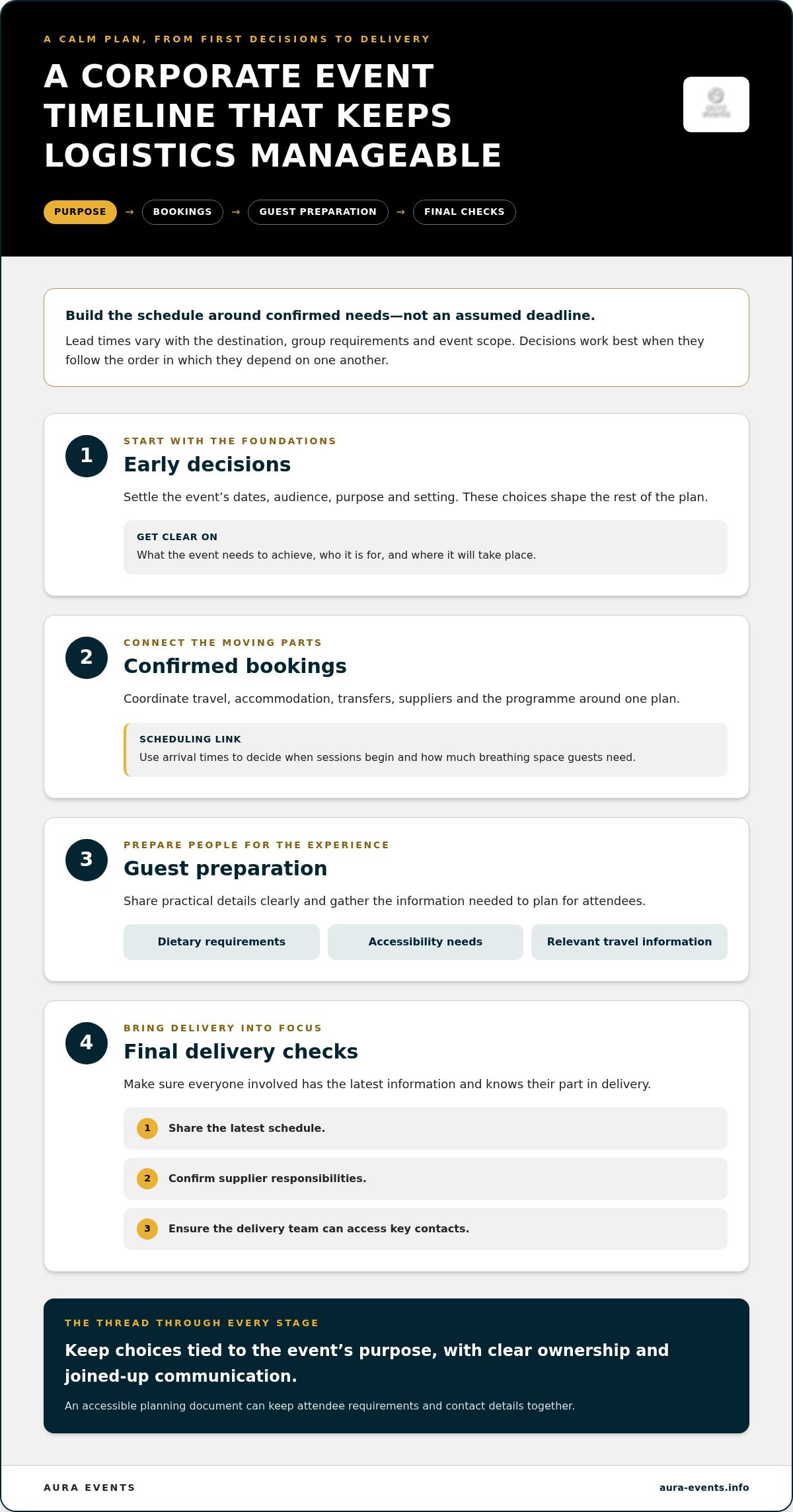
A corporate event planning timeline that keeps logistics manageable
A useful timeline follows the order in which decisions depend on one another. Lead times vary with the destination, group requirements and event scope, so build the schedule around confirmed needs rather than assuming every event follows the same deadline.
Early decisions: settle dates, audience, purpose and setting. These choices shape the rest of the plan.
Confirmed bookings: coordinate travel, accommodation, transfers, suppliers and the programme. Arrival times should inform when sessions begin and how much breathing space guests need.
Guest preparation: communicate practical details clearly and gather dietary requirements, accessibility needs and relevant travel information.
Final delivery checks: share the latest schedule, confirm supplier responsibilities and make sure the delivery team can access key contacts.
Keep attendee requirements and contact details in an accessible planning document, with appropriate access for the people who need it. This considered sequencing is central to stress-free corporate event planning: handle details when they become useful, rather than leaving them until the final rush.
Which event details should be confirmed first?
Start with dates, audience, purpose and setting before shaping session timings or activities. Once travel and accommodation are confirmed, build realistic arrival plans, transfer arrangements and programme timings around how guests will actually reach the event. For example, an event welcoming attendees from London, Amsterdam or New York needs travel planning built into the schedule, not added after session times are fixed. Keep the current information in one place so organisers can work from the same version.
How can you prepare for changes on the day?
Allow flexibility between activities and name an escalation lead for time-sensitive decisions. Keep the current schedule and supplier contacts easy for the delivery team to find. If plans change, communicate what’s different, who’s affected and what happens next, calmly and directly.
Schedule change: identify the decision-maker and the adjustment that can be made.
Supplier coordination: give the lead a clear contact route and agreed responsibilities.
Attendee update: prepare a simple way to share revised timings or arrangements.
For an example of coordinated corporate retreat planning, bring travel, accommodation and event delivery together in one considered experience.
Make stress-free corporate event planning feel effortless for your team
A destination retreat isn’t automatically more effective than a city venue. The right format is the one that serves the objective. A focused meeting with straightforward travel may work best in a conventional venue; a leadership team needing space for strategic discussion and relationship-building may benefit from time away together. Either way, stress-free corporate event planning means the experience feels considered for attendees, not simply impressive on paper.
When does a leadership retreat make sense?
Choose a retreat when concentrated time, shared focus and fewer everyday distractions support the work your team needs to do. Ibiza offers a distinctive island setting, whilst Chamonix-Mont-Blanc brings an alpine environment. The surroundings can shape the atmosphere, but the programme and purpose determine the value. Explore this Chamonix leadership offsite guide for an example of an alpine retreat format.
Consider the whole attendee journey: travel time, accommodation, the rhythm of sessions and opportunities to connect. A conventional venue can keep an event close to work and easier to fit around busy schedules. A residential retreat creates more room for conversation across the programme. Neither suits every team.
What can an experienced event partner coordinate?
Accommodation, transport, catering, activities and session timings work best as parts of one programme, rather than separate arrangements for attendees to piece together. Aura Events brings these elements together through end-to-end planning and on-site coordination, drawing on more than twenty years of local expertise in Ibiza and Chamonix-Mont-Blanc. This joined-up approach helps organisers focus on the intended outcomes while practical details are coordinated. For ideas on shaping a reward around meaningful experiences, see the high-end incentive travel trends guide.
For a retreat or incentive programme, a clear event brief and defined outcomes provide a strong starting point.
Turn a clear brief into a considered experience
The strongest corporate events begin with a clear outcome, then carry it through every decision, from the setting and schedule to the guest experience. A shared plan, defined responsibilities and thoughtful preparation help keep logistics manageable, so your team can focus on the conversations and connections that matter.
That’s the heart of stress-free corporate event planning: not removing every moving part, but bringing them together with purpose. Aura Events draws on more than twenty years of local expertise to deliver end-to-end planning, coordination and on-site management, with specialist destination experience in Ibiza and Chamonix-Mont-Blanc.
If you’re shaping a leadership retreat or incentive programme, start with what you want your people and business to take away. Discuss your corporate retreat with Aura Events and explore how a coordinated plan can bring your objectives to life. A purposeful event can feel effortless for your team, and meaningful long after it ends.
Frequently Asked Questions
How do you plan a corporate event step by step?
Start by defining the event’s purpose, audience and broad requirements, then appoint a lead and agree who owns each workstream. Shortlist a format and setting that fit the objective, coordinate suppliers and guest arrangements, and record decisions in a shared timeline. Before the event, review progress, confirm responsibilities and prepare for possible changes. This sequence keeps decisions connected rather than treating each booking as a separate task.
What is the most stressful part of corporate event planning?
Often, the pressure comes from coordinating decisions that depend on one another. Travel affects arrival times; arrival times affect the programme; guest requirements can influence catering, transport and accessibility arrangements. If ownership or approvals are unclear, organisers may repeat questions or discover issues late. A shared schedule, named decision-makers and regular milestone updates help make dependencies visible and give the team a calmer way to resolve them.
How far in advance should you plan a corporate event?
There’s no universal lead time: it depends on the destination, group requirements and event scope. A local meeting may involve fewer moving parts than a retreat requiring accommodation, travel, activities and coordinated transfers. Begin planning once the purpose, audience and preferred dates are clear, then prioritise decisions that affect other arrangements. Whether attendees are travelling from London, Manchester, Bristol, Amsterdam, Boston, New York, Washington or Miami, include journey planning in the schedule.
Can an event planner make corporate event planning less stressful?
Yes. An experienced event planner can coordinate suppliers, schedules, accommodation, transport and on-site delivery, helping organisers retain oversight without managing every detail themselves. For stress-free corporate event planning, agree the brief, approval points and update rhythm at the outset. Aura Events brings more than twenty years of local expertise and end-to-end planning to corporate retreats and incentive travel in Ibiza and Chamonix-Mont-Blanc.



Comments