
Executive Mountain Retreats: The Strategic Guide to High-Altitude Leadership in 2026
What if your next leadership offsite could do more than move the team out of the boardroom? Executive mountain retreats use a change of scale and setting to create space for fresh perspective, sharper strategic conversations and decisions that travel back to the business.
It’s a familiar challenge: packed calendars, corporate fatigue and office routines that leave little room for creative thinking. Yet a mountain retreat only delivers value when the work and the setting are designed together. The agenda needs room for focused discussion, genuine downtime and outdoor experiences, without leaving executives anxious about the details.
This guide explores how to turn a high-altitude setting into a practical tool for leadership clarity and team transformation. You’ll discover how to shape sessions around strategic priorities, balance work with guided mountain activities, and plan travel and logistics with confidence. In Chamonix, Aura Events brings over 20 years of local expertise to bespoke corporate retreats, with end-to-end management that lets leaders focus on the work. The Aura Summit concept brings that ambition to life: a considered, memorable experience built around the outcomes your team needs.
Table of Contents
Redefining the Corporate Offsite: Why Executives are Headed to the Peaks
The Psychology of Altitude: How Mountain Environments Sharpen Strategic Focus
Designing a High-Impact Itinerary: Balancing Boardroom Rigour with Alpine Adventure
Selecting the Ultimate Peak: Why Chamonix Remains the Gold Standard for 2026
Redefining the Corporate Offsite: Why Executives are Headed to the Peaks
An executive mountain retreat is more than a change of scenery. It’s an immersive setting for high-level decisions, where leaders can step away from routine demands and give complex questions their full attention. In a sterile boardroom, familiar rhythms can keep discussion on familiar ground. In the Alps, the scale and quiet of the landscape offer a different frame of reference, inviting teams to question assumptions and consider the wider view.
That shift matters in 2026, as companies look for offsites that produce more than a welcome break. The appeal of “quiet luxury” lies in privacy, considered comfort and room to speak candidly, rather than conspicuous display. The Aura Summit brings these elements together: bespoke luxury paired with rigorous business planning, so the experience serves a clear strategic purpose.
The Shift from Incentive to Investment
A retreat can still feel rewarding, but its value is in what the team can clarify, decide and carry forward. Time away from daily interruptions creates room to examine priorities and work through difficult choices. Nature adds a restorative pause; it may help ease the pressure of a packed schedule and make space for more open-ended thinking. The aim isn’t to promise a particular biological response. It’s to design an environment where leaders can focus, reconnect and approach problems from a fresh angle.
Outdoor experiences should support the work, not compete with it. Thoughtful team building can help colleagues strengthen working relationships, clarify roles and practise collaboration beyond the meeting room.
Aura Events: The Insider Advantage
In Chamonix, local knowledge is a practical asset. Aura Events brings over 20 years of experience in the region, coordinating elements such as luxury chalet sourcing, private chef services, ground transport and bespoke itineraries. End-to-end management helps keep logistical demands from crowding out the retreat’s purpose, leaving executives more attention for the decisions in front of them. That’s the difference between an alpine escape and a carefully designed leadership offsite.
The Psychology of Altitude: How Mountain Environments Sharpen Strategic Focus
Height offers a useful metaphor for leadership, not a shortcut to better thinking. From a mountain vantage point, the details below sit within a wider landscape. That shift can prompt executives to step back from immediate pressures, test assumptions and consider how today’s decisions fit the longer strategy.
The vastness of the Alps doesn’t make corporate challenges disappear; it can make them easier to see in proportion. Natural light, open views and time outdoors may provide a welcome contrast to screen-heavy routines, though no setting can guarantee sharper cognition. The value lies in creating conditions for considered attention: a walk before a difficult session, daylight breaks between discussions, and an agenda that leaves room to reflect.
Remote alpine surroundings can also support a digital pause. Agree in advance which sessions require devices, set clear periods for checking urgent messages, and protect uninterrupted blocks for deep work. A retreat needn’t mean total disconnection to reduce the pull of constant notifications.
Breaking the “Office Habit”
Teams often carry familiar meeting roles and defensive patterns from the office. A change of environment can interrupt those routines, making it easier to hear a different perspective, provided the facilitator gives everyone space to contribute. Shared physical challenges, chosen to suit the group, can also reveal how colleagues communicate and support one another. Trust grows through observed behaviour, not simply through being in the same place.
Strategic Alignment Amongst the Clouds
A mountain setting can offer a neutral backdrop for conversations that feel difficult in the usual workplace. Use the change of scene to explore disagreements with curiosity, then translate discussion into owners, decisions and next steps. For a practical look at shaping those conversations in Chamonix, explore Aura Events’ Chamonix leadership offsites.
Well-designed executive mountain retreats make the setting serve the work. With over 20 years of local expertise, Aura Events can coordinate retreat logistics in Chamonix, giving leadership teams more room to focus on alignment and the choices ahead.
Designing a High-Impact Itinerary: Balancing Boardroom Rigour with Alpine Adventure
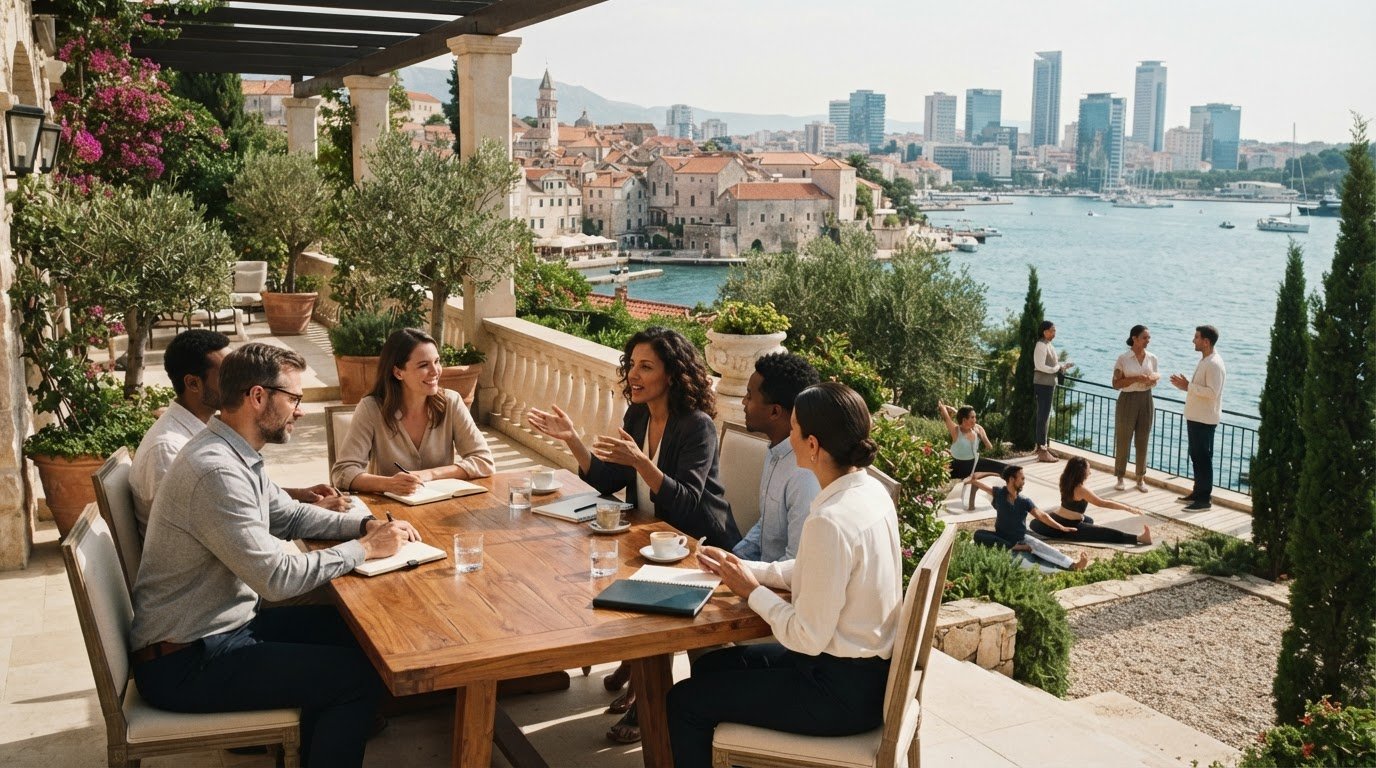
A strong itinerary isn’t a packed one. There’s no universal “Golden Ratio” for strategy sessions and outdoor time; the right balance depends on the decisions the team needs to make, the season and participants’ preferences. Protect uninterrupted time for complex discussions, then use guided mountain activities or wellness programmes to create a change of pace. Build in breathing room, too. Rushing between a meeting and an excursion leaves little space for either to land.
Step 1: Define the Strategic Anchor
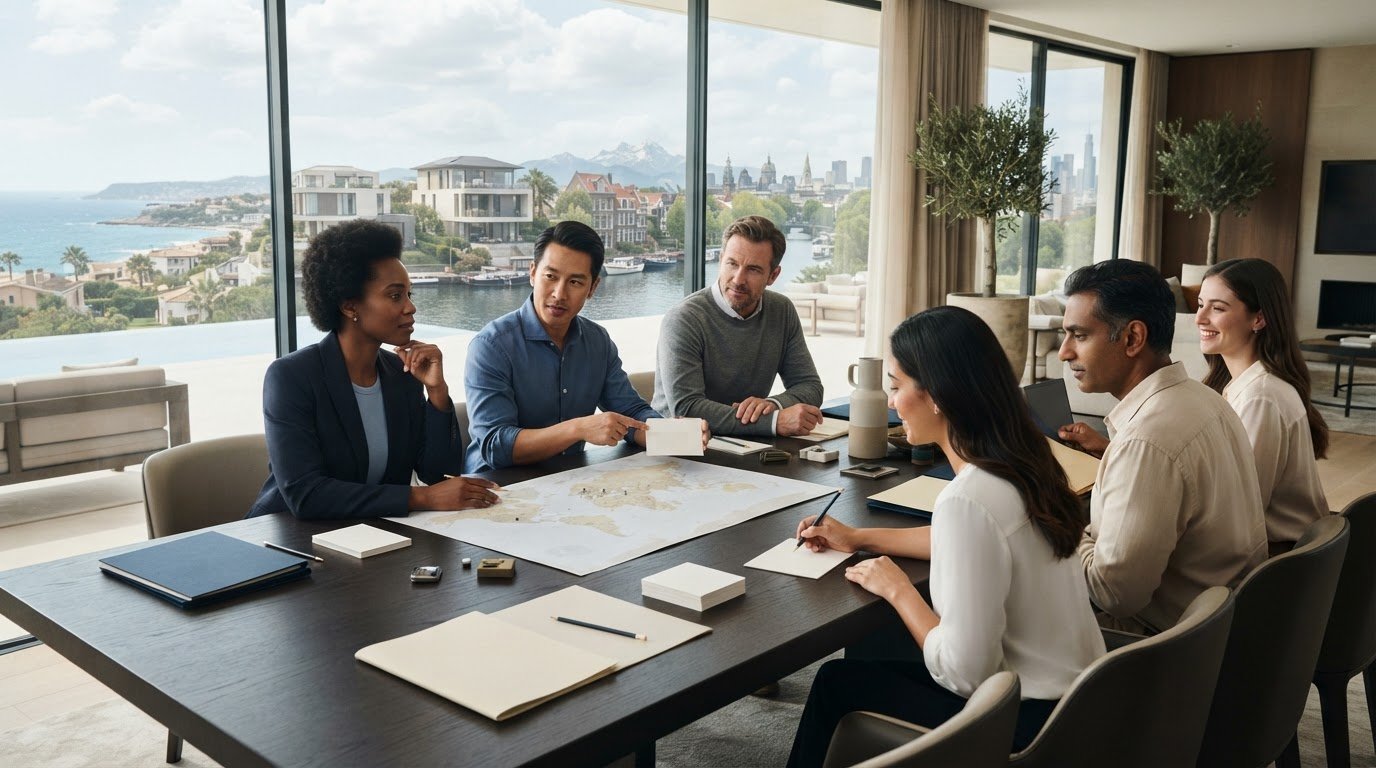
Start with one central question the retreat must answer, such as how to align around a new direction or remove barriers to execution. Use it to shape the agenda and choose a theme that gives the work a memorable frame. “The Ascent”, for instance, might help a team examine milestones, obstacles and the next stage of growth. Keep the metaphor useful, not decorative: finish sessions with decisions, owners and follow-up actions.
Step 2: Source Activities with Purpose
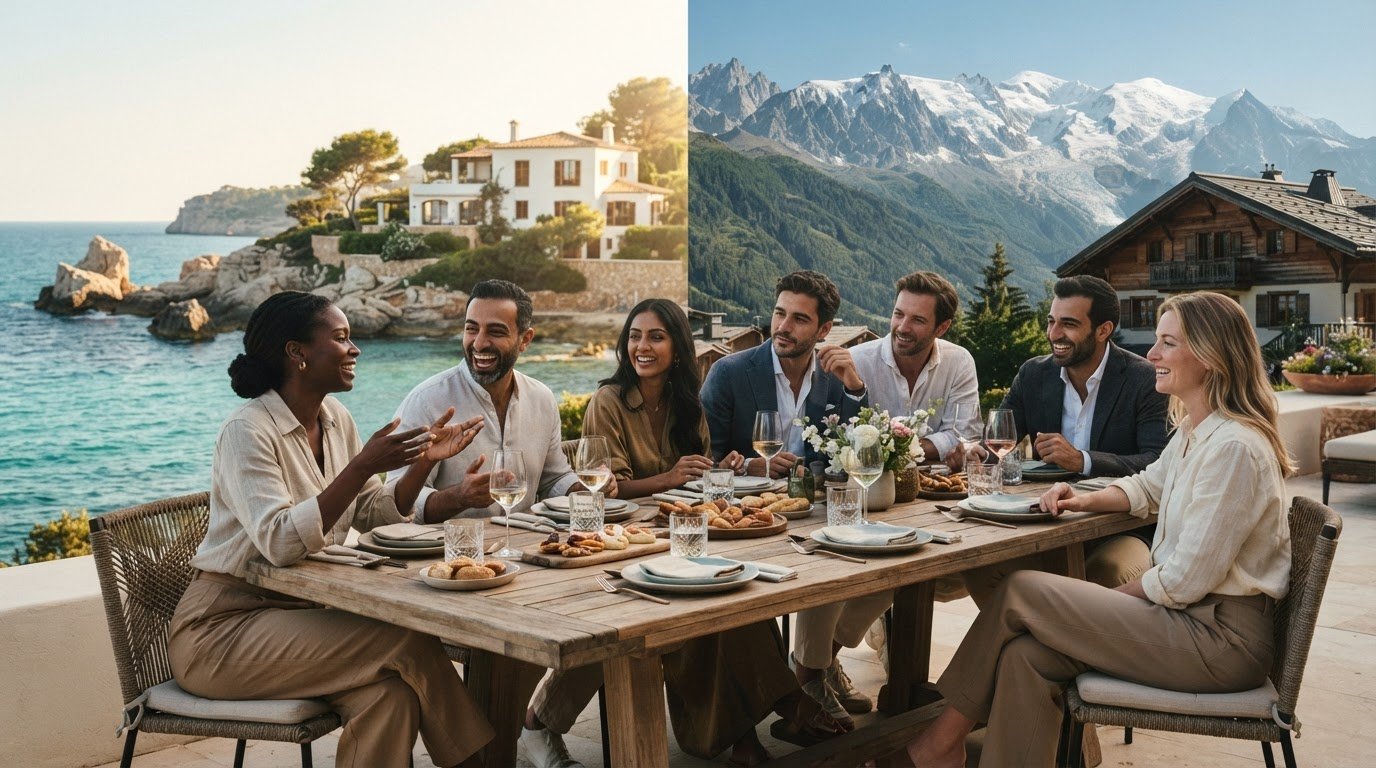
Generic games can feel disconnected from executive priorities. Choose experiences that suit the group’s interests and abilities, with alternatives so participation doesn’t depend on skiing or a particular fitness level. A guided mountain tour or a wellness-focused forest walk can encourage conversation in a different setting. For teams meeting in Ibiza, a private yacht charter offers a distinct coastal experience; it belongs in a separate destination itinerary, not an alpine schedule.
Evenings matter. A private chef and thoughtfully planned shared meal can give colleagues time to talk beyond the agenda, a form of “gastro-diplomacy” that complements rather than replaces the day’s work.
For a mobile boardroom, confirm the venue’s 2026 availability, connectivity, presentation facilities and transport plan before committing. Consider weather alternatives and allow time to move between locations. Aura Events can help organise bespoke Chamonix leadership offsites, including guided activities, catering and logistics. Explore bespoke corporate retreat planning to shape an itinerary around your team’s priorities.
Selecting the Ultimate Peak: Why Chamonix Remains the Gold Standard for 2026
Chamonix pairs the stature of Mont Blanc with the practical infrastructure of an established alpine destination. Its heritage is part of the appeal; so is the range of accommodation, transport and mountain experiences available to shape a focused leadership offsite. For teams travelling from London, Manchester or Bristol, plan the full journey rather than assuming a direct route. Geneva Airport is just over an hour from Chamonix, giving international groups a useful arrival point, with onward transport to organise.
For executive mountain retreats, the right accommodation should work as a genuine home base: a place to gather, share meals and step back from the pace of the working day. Aura Events sources luxury chalets, with the chance to discuss preferences such as spa facilities and staffing as part of the brief. These details should be confirmed for the specific property and dates, rather than assumed.
The Aura Events Chamonix Experience
A public listing can show what a venue looks like. Local expertise helps assess whether it suits the team’s objectives, setting and itinerary. Aura Events brings over 20 years of Chamonix experience to bespoke offsites, coordinating chalet sourcing, private chef services and other retreat logistics. For a wider view of changing executive travel priorities, read about high-end incentive travel trends.
Preparing for the Ascent: Logistics and Ground Transport
Arrival details shape the first impression. Confirm flight or rail connections, transfer arrangements, luggage needs and timings between accommodation and activities before the team travels. Private transport and ground logistics can make transitions simpler, whilst a clear itinerary helps executives stay focused on the retreat rather than route-finding. Aura Events’ end-to-end management brings these moving parts together, with local guidance informing venue and activity choices. The aim is not to remove every travel consideration, but to make the journey feel considered from arrival onwards.
Make Your Next Leadership Offsite Count
The most effective executive mountain retreats are designed around more than a striking view. They give leaders room to step back, align on priorities and return with decisions they can put into action. A well-shaped itinerary brings focused strategy sessions together with restorative time outdoors, while thoughtful logistics protect the team’s attention.
Chamonix offers a compelling setting for that work, but the details matter: the right home base, activities suited to the group and a journey organised around the agenda. Aura Events brings over 20 years of alpine expertise, bespoke itineraries for global C-suite teams and insider access to Chamonix luxury chalets. The result is a retreat shaped around your people and purpose, not a standard offsite template.
If your next leadership gathering calls for greater clarity and a setting that stays with the team, enquire about your bespoke executive mountain retreat with Aura Events. A considered change of perspective can be the beginning of meaningful progress.
Frequently Asked Questions
What makes Chamonix the best location for executive mountain retreats?
Chamonix is a strong choice for executive mountain retreats because it combines a distinctive alpine setting with established visitor infrastructure. Geneva Airport is just over an hour away, making onward travel practical for teams coming from London, Amsterdam, Manchester, Bristol, Boston, New York, Washington or Miami, although connections vary. Its mountain heritage and range of accommodation and activities allow organisers to shape an offsite around strategic work and time outdoors.
How do we balance work sessions with mountain activities during an offsite?
Start with the decisions the team needs to make, then give them protected time in the agenda. Schedule focused working sessions, allow breaks and travel time, and choose mountain activities that complement the retreat rather than crowding it. For example, a guided outing can offer a change of pace after a demanding discussion. Close each work block by recording decisions, owners and next steps, so insights become actionable.
Are mountain retreats suitable for team members who do not ski?
Yes. A mountain retreat doesn’t need to revolve around skiing. Organisers can consider guided mountain activities, wellness and spa programmes, or team-building options that suit different interests and abilities. Ask participants about access needs and preferences before finalising the itinerary, then offer meaningful alternatives rather than treating non-skiers as an afterthought. The aim is shared participation and connection, not a single activity that only some of the team can enjoy.
What is the ideal duration for a high-impact leadership retreat?
There’s no universal ideal, but a focused two-to-four-day format can provide room for strategic sessions, shared experiences and reflection without turning the retreat into an extended absence from work. Set the duration according to the objective, travel time and complexity of the decisions involved. A shorter programme may suit a defined planning milestone; a broader transformation agenda may need more space for discussion and alignment.
How does Aura Events ensure the privacy and security of our executive team?
Aura Events provides end-to-end retreat management, luxury chalet sourcing and ground transportation logistics, but specific security protocols aren’t stated. Before booking, ask about property access, guest information handling, private meeting arrangements and transport details. Clarify your organisation’s confidentiality requirements with the venue and relevant suppliers, too. Aura’s local expertise can help coordinate the retreat components, whilst your team confirms that the arrangements meet its privacy and security expectations.
Comments