
Incentive travel trends for 2026: budgets and spending
Only 13% of surveyed incentive travel buyers globally predict activity will decline in 2026 compared with 2025, while 37% anticipate growth by 2027. The incentive travel trends for 2026 point to a market that is still moving forward, but with sharper scrutiny of budgets and greater ambition for the experience itself. For UK planners, the challenge is to make each trip feel distinctive whilst keeping its purpose clear.
That calls for more than choosing an impressive destination. Buyers are weighing rising costs against the value of rewarding and engaging their strongest performers. Attendees, meanwhile, increasingly expect an experience that feels personal, memorable and worth the time away.
This article explores what the latest forecasts mean for buyer budgets, experience design, per-person spending and programme activities. You’ll see where organisations are protecting investment, where they’re adjusting plans, and how to shape an incentive trip that feels considered rather than simply costly.
Table of Contents
Buyer expectations for incentive travel budgets
In 2026, half of incentive travel buyers expected budgets to match inflation, while a quarter expected them to outpace it. Inflation was projected to moderate to 2-4% in 2026, yet rising costs remain a pressure point. In a C&IT survey, 92% of respondents were concerned about incentive travel costs. For UK planners, that tension makes a clear business case essential: a luxury destination must connect its offering to employee recognition, engagement or performance.
Regional expectations aren’t identical. About 10% of organisations in each of North America and Europe expected event-gifting budget increases to outpace inflation in 2026. Around 58% of North American organisations expected event-gifting budgets to increase, compared with about 54% of European organisations. These figures offer context, not a UK-specific forecast. UK buyers can use them to frame discussions, then select locations and programme elements against their own objectives and budget.
Scrutiny makes detail matter. Set the programme’s business objective first, then divide the budget into travel, accommodation, activities, meals and gifting. Identify the elements that directly support the objective, such as a team-building activity tied to collaboration. If costs rise, protect those elements before reducing the overall experience. Compare alternatives by their value to attendees, not just their headline cost. A shorter transfer or a different activity may preserve the experience better than cutting time together.
Budget cuts need deliberate value engineering. About 10% of organisations in both Europe and North America expected gifting increases to outpace inflation, suggesting gifting isn’t the only measure of a reward’s worth. Review each cost line, reduce low-impact extras and retain the moments employees will remember. For UK tax and HMRC planning, document the business purpose, attendee criteria and costs for each trip element. Distinguish programme activities from personal rewards, then apply the relevant employee tax treatment.
Measure return by setting a baseline before selecting a destination. Track retention, employee net promoter score, post-trip engagement and goal attainment variance after the programme. Compare retention among trip qualifiers and non-qualifiers over the 12 months following the trip. Record the same measures consistently, so budget discussions can focus on outcomes rather than impressions. This gives finance teams clearer points for assessing future spend and adjusting the programme.
Experience design and attendee expectations
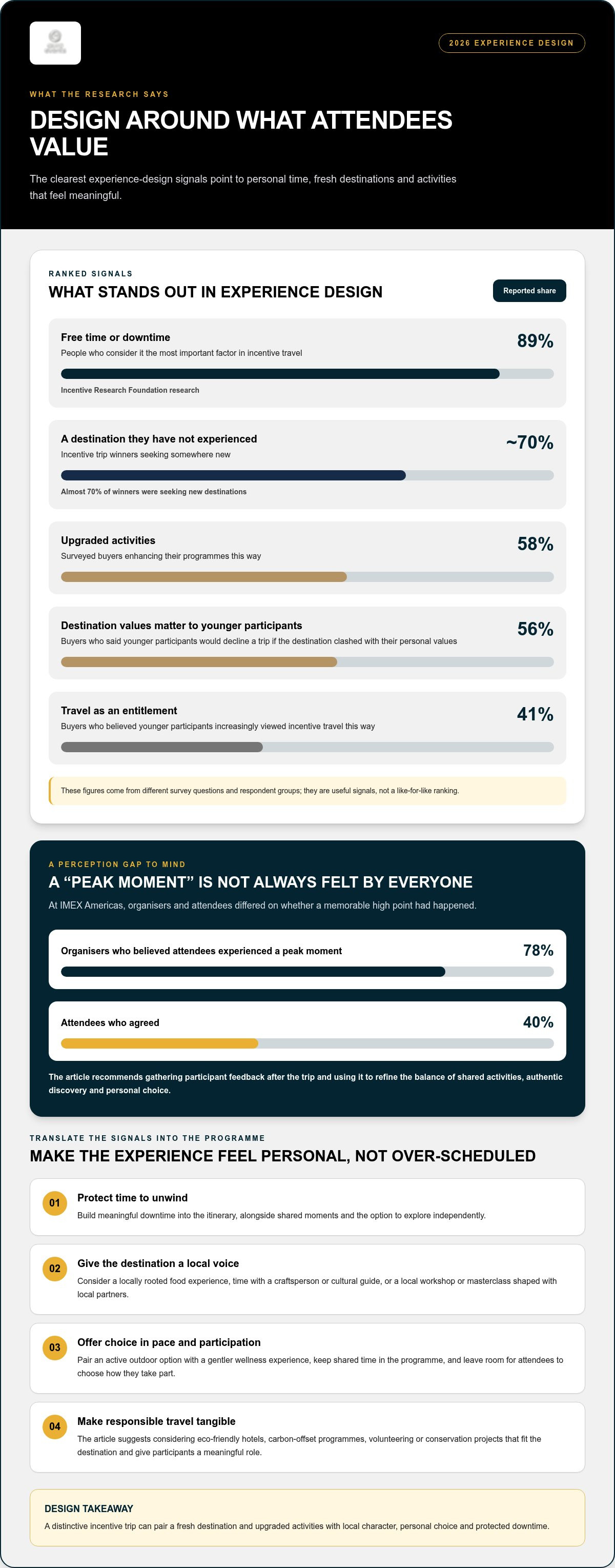
In 2026, 58% of surveyed incentive travel buyers were enhancing programmes by upgrading activities. The strongest experiences do more than add spectacle: they give people a reason to connect, reflect or try something unfamiliar. Almost 70% of incentive trip winners were seeking destinations they hadn’t experienced before. For planners, that makes originality a practical design choice, not simply a luxury detail.
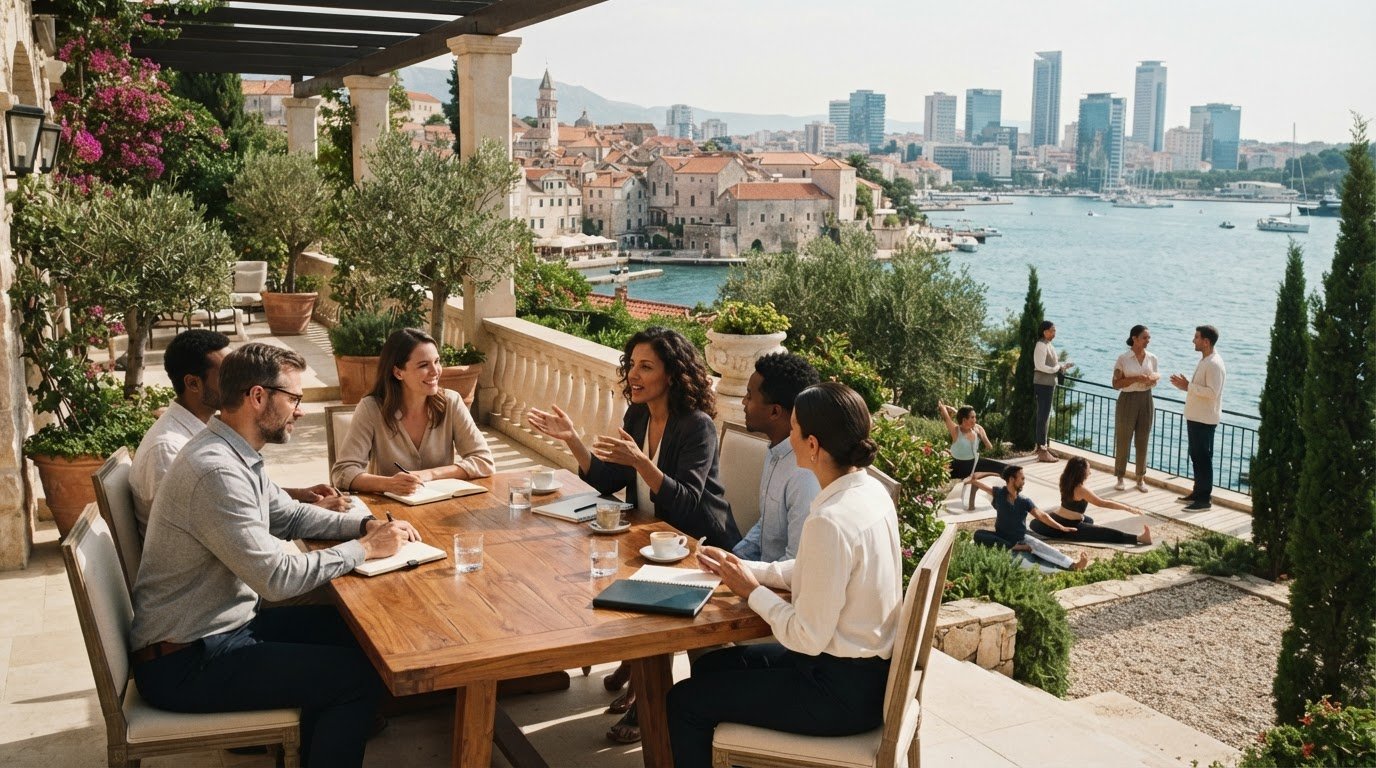
Authentic experiences bring a destination’s character into the programme. Replace a standard group dinner with a locally rooted food experience, or give attendees time with a craftsperson or cultural guide. These moments feel more distinctive when local partners help shape them. For groups with different preferences, offer a choice of pace: an active outdoor option alongside a gentler wellness experience, with shared time to keep everyone connected.
Values matter, particularly for younger qualifiers. Among surveyed buyers, 56% said younger participants would decline trips if destinations clashed with their personal values. Meanwhile, 41% believed younger participants increasingly saw incentive travel as an entitlement. Make the reward feel earned and relevant: explain why the destination was chosen, build in local context, and leave space for attendees to choose how they take part. Incentive Research Foundation research found that 89% of people consider free time or downtime the most important factor in incentive travel.
Responsible travel can be built into the experience through eco-friendly hotels, carbon-offset programmes, volunteering or conservation projects. Choose options that fit the destination and give participants a meaningful role, rather than treating sustainability as a label. For deeper engagement, add a local workshop or masterclass to an immersive cultural itinerary, while protecting time to explore independently. A considered retreat experience design can bring these elements together without making every moment feel scheduled.
There’s also a gap between how organisers and attendees describe a memorable event. At IMEX Americas, 78% of organisers believed attendees experienced a peak moment, but only 40% of attendees agreed. Gather participant feedback after the trip, then use it to refine the balance between shared activities, authentic discovery and personal choice.
Per-person spending and cost-cutting strategies
In 2026, a quarter of incentive travel buyers expected to trim per-person spending. Inflation and cost escalation were the top issue for 38% of surveyed respondents. The answer isn’t simply to remove premium details. First, separate essential programme elements from optional extras, then protect the parts that support recognition, connection or corporate goals. A cultural dining experience may create more lasting value than a larger gift.
Cost reductions are already shaping destination choices. In Western Europe, 67% of incentive programme organisers cited choosing closer destinations as a budget-management strategy; 42% cited selecting less expensive destinations. For international programmes, compare the full itinerary: transport, accommodation, activities and time in transit. A closer location can preserve time for shared experiences, whilst a lower-cost destination may free budget for a more distinctive activity.
Personalisation needn’t mean a separate itinerary for every attendee. Offer a small set of meaningful choices, such as a guided activity, a wellness session or protected free time. The planning guidance recommends micro-options on three out of five trip days. This gives participants autonomy while keeping the programme manageable. Agree dining preferences and activity choices early, then build flexible blocks around shared moments.
AI can support this process, but it needs clear boundaries and human judgement. More than 75% of organisations used AI in at least one business function, and 93% of Incentive Travel Index respondents used ChatGPT in 2025. Planners can use these tools to organise attendee preferences, compare itinerary options or draft communications. Review outputs carefully, especially where personal information or accessibility needs are involved. Use AI to speed up preparation, not to decide what makes a reward feel personal.
To control the budget, assess each proposed choice against attendee value and the programme’s purpose. Track spending by category, record changes and compare actual costs with the approved plan. This makes future decisions clearer: retain elements linked to engagement, refine those that fall short, and direct savings towards the experiences participants value most.
Incentive travel activity forecasts
For 2026, the clearest destination signal is appetite for somewhere new to the programme. Among surveyed buyers, 69% were actively searching for new destinations, and 63% had booked one for 2026 or 2027. No single country leads these figures. Japan is one example to plan early: cherry blossom season books out ahead, making timing an important part of destination selection.
Activity forecasts remain positive, although growth varies by region and year. Globally, 13% of surveyed buyers predicted a decline in 2026 compared with 2025, while 37% anticipated increased activity by 2027. In APAC, activity is expected to rise by 32% in 2026 and 46% by 2027. North American activity is expected to rise by 29% in 2026 and 36% in 2027. These figures highlight momentum, not a uniform global outlook.
For UK planners considering Europe, destination choice still turns on practical expectations. Personal safety concerns disqualify destinations for 47% of surveyed buyers; poor air access does so for 40%, and geopolitical risk for 38%. High-quality hotels are a destination driver for 34%. Check access, local infrastructure and accommodation together: a striking resort may not suit a group if travel links or on-the-ground logistics undermine the experience.
The broader outlook offers reason to keep programmes in view. Heading into 2026, 85% of event professionals were optimistic or very optimistic about the events industry. The Incentive Travel Index reported that 75% agreed incentive travel’s value remains strong, and 47% disagreed that group incentive travel is losing relevance. For programme planners, the takeaway is to protect the business purpose while selecting locations that meet attendee expectations.
Compare potential destinations against access, safety, hotel quality and what makes each place distinctive. Then match the itinerary to the group and the objective, rather than choosing a location for novelty alone. Plan your incentive destination strategy around the experience you want participants to remember.
No single country is identified as the most popular. Buyers are seeking new destinations, with Japan one example under consideration.
Aura Events: Ibiza Corporate Retreats
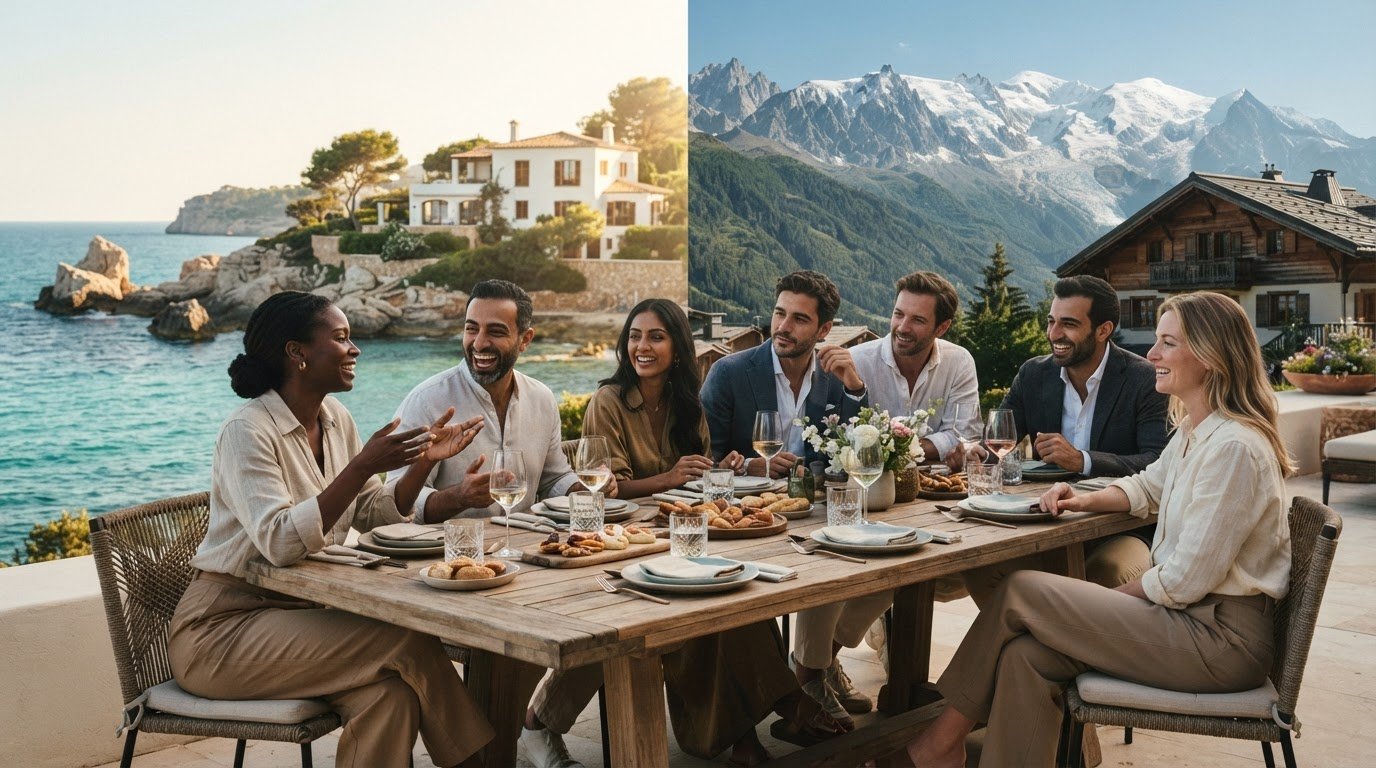
Aura Events designs and manages high-end corporate retreats for organisations seeking an incentive with purpose and a strong sense of place. Its Ibiza Corporate Retreats bring together time to connect, considered experiences and space to unwind, shaped around your programme’s objectives.
Turn to Aura Events when your destination and experience choices need to work as one. Luxury Villa and Chalet Sourcing helps shape the setting, while Private Yacht Charters offer a distinctive perspective on Ibiza. For a mountain environment, Chamonix Leadership Offsites provide a different backdrop for bringing teams together.
Share your goals and preferred destination to start shaping a retreat around your people and priorities. Visit aura-events.info to discuss your plans with Aura Events.
Shape a reward with lasting meaning
The strongest incentive is not simply a change of scenery. It gives people a reason to reconnect with colleagues, feel recognised and return with renewed purpose. Use the incentive travel trends for 2026 as a prompt to shape a programme around what your team should experience, not just where they should go.
Aura Events can turn that intention into a carefully considered retreat, with Ibiza Corporate Retreats, Chamonix Leadership Offsites and Luxury Villa and Chalet Sourcing. The right setting can support the programme’s purpose, whether that means creating room for meaningful conversation or giving a team a memorable shared experience.
When you’re ready to develop your plans, contact Aura Events to plan your retreat. A thoughtful next step can bring your objectives and your destination into focus.
Frequently Asked Questions
What are the key incentive travel trends for 2026?
The key incentive travel trends for 2026 centre on distinctive destinations, thoughtful experience design and closer attention to attendee needs. For planners, the practical shift is to make the reward feel specific to its audience: for example, pair a shared cultural activity with space for individuals to explore independently. This helps the trip feel considered rather than like a standard itinerary with a luxury setting.
How much are UK businesses budgeting per person for incentive travel in 2026?
There isn’t one per-person budget that applies to UK businesses. Build a forecast from the actual itinerary: travel, accommodation, meals, activities and local transport. Then assess how group size and destination affect each component. Separate fixed commitments from flexible choices, such as activities or gifting. This gives finance teams a clearer basis for comparing programme formats without relying on an unsuitable market-wide figure.
How are AI and personalisation being used in incentive travel programmes?
AI can help planners turn attendee feedback into useful itinerary choices. For example, it can group dietary preferences, preferred activity levels and requests for quieter time before the schedule is finalised. Keep a person responsible for reviewing suggestions and resolving conflicting needs. Personalisation works best when it improves relevant decisions, rather than creating a separate programme for every traveller or letting automated recommendations dictate the experience.
Are companies favouring experiential or wellness-focused incentive trips in 2026?
Experiential design is prominent, while wellness can complement it rather than compete with it. A programme might combine a guided cultural visit with a restorative spa session, or offer an active excursion alongside a quieter alternative. Ask what the reward should help attendees feel or do. Align activities with that purpose, and make participation comfortable for people with different interests and abilities.
What are the main risks and challenges for incentive travel in 2026?
Cost changes, travel disruption, destination safety and geopolitical events can all affect planning. Build a response plan before confirming the itinerary: identify which activities can move indoors, which transport arrangements have alternatives, and who will communicate changes to attendees. Consider accessibility, dietary requirements and local infrastructure when selecting a destination. A clear decision process helps organisers respond calmly if circumstances shift, without losing sight of the trip’s purpose.
How do incentive travel trends differ between the UK and other markets?
UK buyers can use European and North American gifting-budget trends as context, but should base plans on their own objectives and budget. Activity forecasts vary by region: APAC and North America both expect growth, while the global outlook includes both growth and some expected declines.

Comments